
Hoodening
A Village at the Heart of the Winter Horse

Who doesn’t love British pantomime? Each Christmas, it revels in exaggeration, disguise, and noisy audience participation. Few realise that this same spirit of festive misrule once played on medieval Kentish doorsteps — in the winter custom we know as Hoodening!
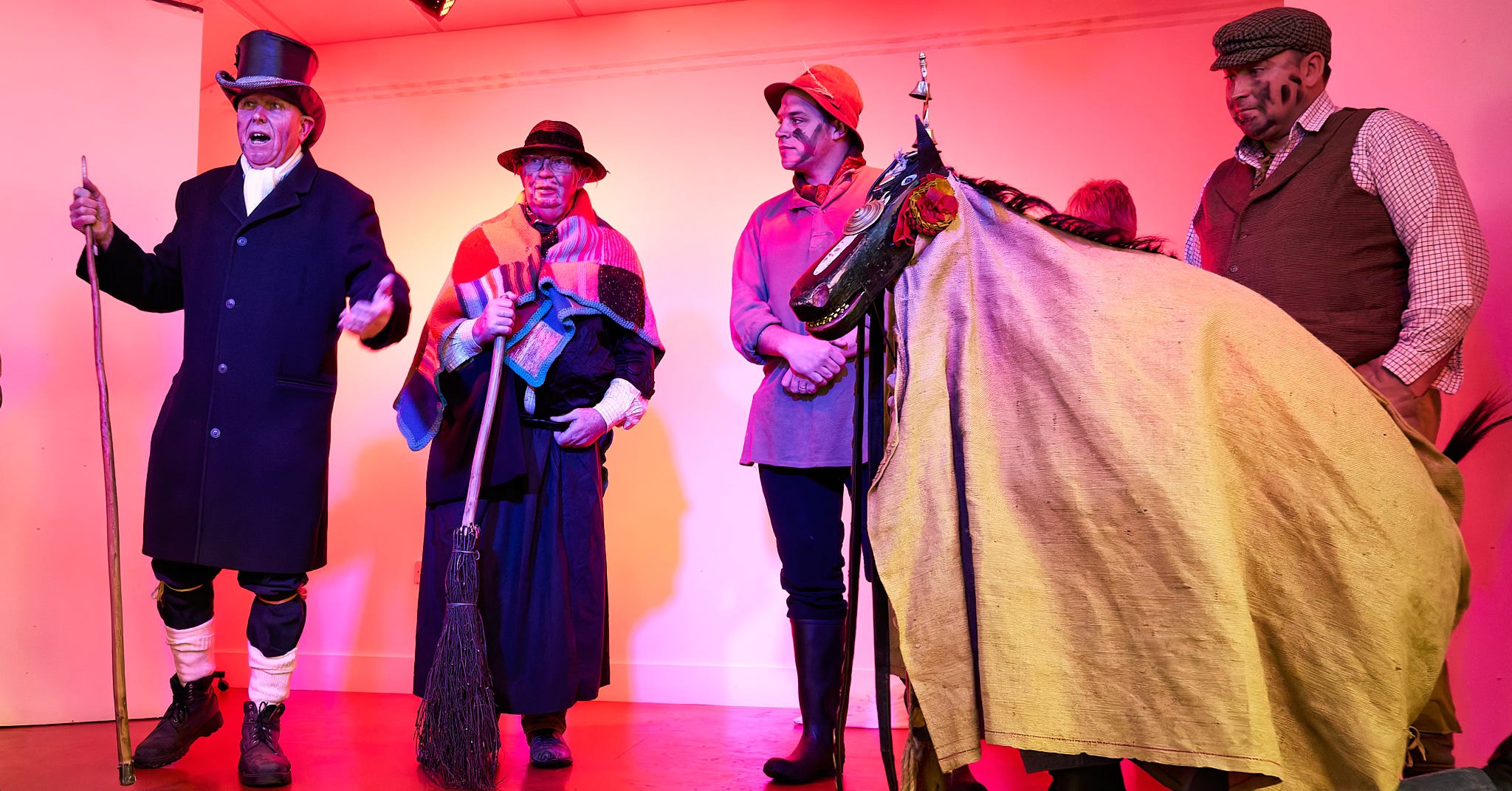
Prologue
Hooden is pronounced like wooden, yet the word itself resists easy explanation. For generations, it has invited debate. Some trace it to the sackcloth hood worn to disguise the man who carried the horse’s head; others look further back, hearing echoes of the Anglo-Saxon god Woden. Another theory links the name to Robin Hood, even suggesting that the Hooden’s companion, Mollie, may preserve a folk-memory of his beloved Marian. None of these ideas can be proved, but together they add to the layered history—and enduring charm—of the custom.
Origins
My clothing was once of a linsey-woolsey fine,
My mane it was sleek and my body it did shine;
But now I’m getting old and I’m going to decay…Poor Old Horse
— Traditional broadside folk song
In the deep midwinter of East Kent, when the icy wind blows in from the North Sea, an old sound once resonated through the lanes and trackways: the hollow clack of a wooden jaw. It was a sound that signalled mischief and merriment in equal measure. As households lit candles for the long December nights, they knew a visit might come—unpredictable, noisy, and exciting. This was the arrival of the hooden horse, and with it the peculiar midwinter custom known simply as Hoodening.
While the earliest generations who knew the hooden horse left no written records, their stories were passed down through memory and laughter. But if one imagines a cold December evening, long before streetlights softened Kentish village lanes, the scene begins to take shape. A group of farm labourers—laid off after harvest, spirits lifted by the promise of Christmas ale—assemble in a barn or stable. One lifts a carved wooden horse’s head, hinged at the jaw, and fixes it onto a pole. Then pulls a length of heavy cloth around himself to hide the performer and give the horse its body. Others don odd garments, absurd hats, women’s aprons, or borrowed coats.
Together, the hoodeners set out into the night, lanterns swinging, laughter carrying on the cold air. To the families who opened their doors, the sight must have been both wild and welcome. The poor old horse surged into the room, snapping, nudging and collapsing theatrically. Behind it came the rest of the troupe—a wagoner trying in vain to restrain the beast, a comic Mollie in makeshift petticoats, a musician plucking a tune, and a supporting cast. A few lines of improvised humour followed, and a comic mock death. Then, inevitably, the victim is revived by tonic of ale to triumphant applause. In return, the household offered gifts to the performers for their skill.
St Nicholas-at-Wade
St Nicholas-at-Wade is famed as a parish where travellers could wade across the Wantsum Channel onto the Isle of Thanet when it was separated from Kent. It was also one of the last parishes in Kent where the Hoodening custom survived, and arguably the most important one. The last recorded period when St Nicholas-at-Wade elders still remembered Hoodening as a living custom was roughly up to the early 1920s. It is also a key parish through which the custom was preserved and revived.
Hoodening was never merely a performance; it was deeply rooted in the very heartbeat of St Nicholas-at-Wade’s centuries-old agricultural life. In the 17th century, the parish was surrounded by fertile farmland, with arable fields, grazing livestock, and thriving hop gardens typical of east Kent. The village’s rhythm was dictated by the changing seasons. Come December, the harvest had been gathered, the ploughs stored away, and the mill grew quieter as winter set in. During this cold season, neighbours leaned on each other’s goodwill, sharing warmth through festive gatherings. It was in this vibrant, close-knit atmosphere that Hoodening truly came alive.
Every household knew the unwritten rule that hospitality to the Hoodening visitors was essential. Whether it was a mug of ale, a slice of bread, or a handful of coins—any small offering would do. More than a simple gesture of kindness, it was believed to be a pact with winter’s luck. Rumour had it that a visit from the hoodeners could bring good fortune for the year ahead—healthy livestock, strong workhorses, and bountiful harvests. Whether they genuinely believed in the magic or not, few dared turn away the hooden horse.
Fieldwork
Tonight, on the 18th of December, is the St Nicholas-at-Wade hoodeners’ 2025 opening night debut. Tim Downie [FolkLands Podcast] and I eagerly join the ‘Mollie’ (David Gray) and the cast before their much-awaited annual performance at Monkton Village Hall. This beloved venue has hosted one of their festive Hoodening performances for over 35 years, consistently packing the house with excited fans eager for Christmas cheer.
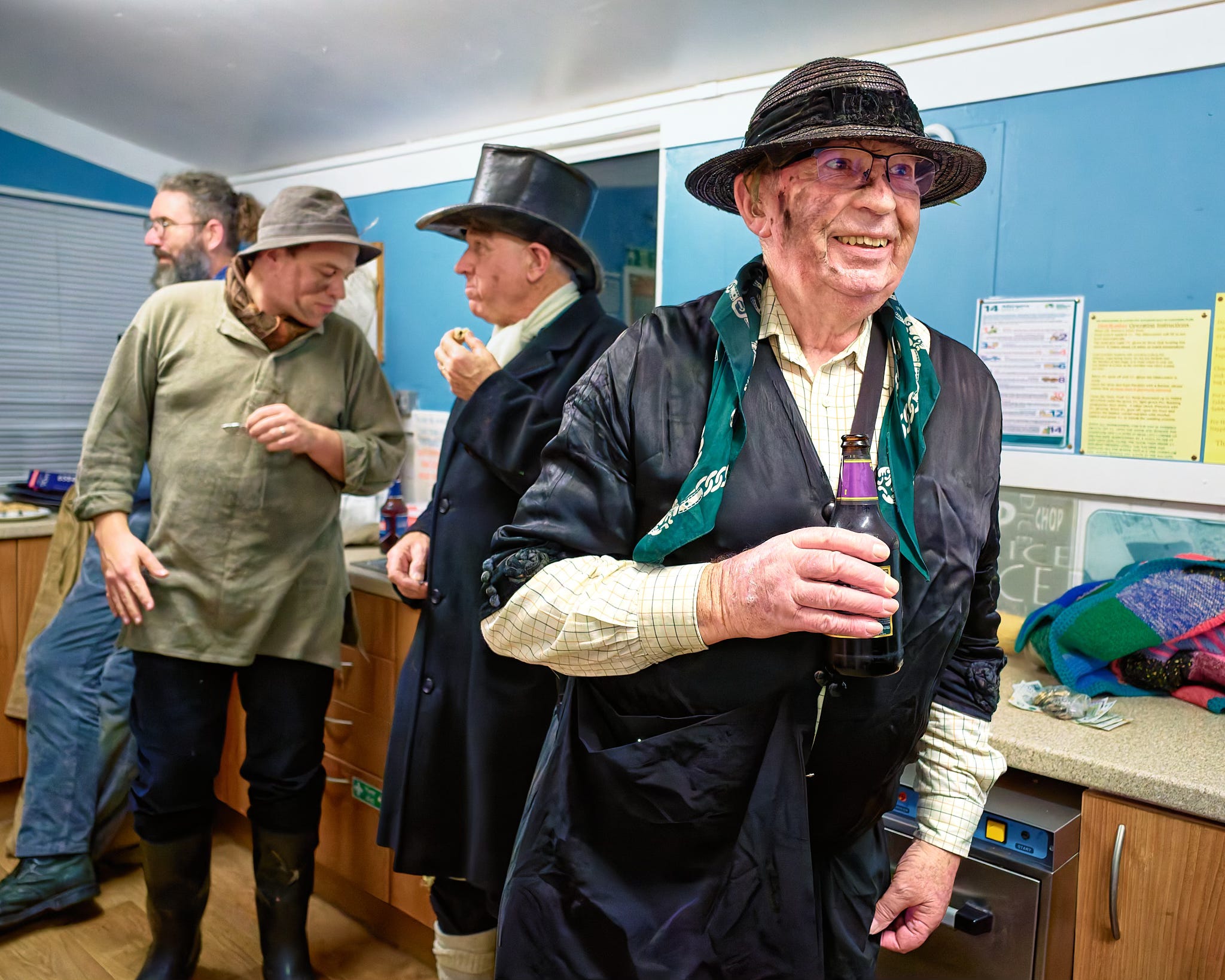
We joined a lively scene as the cast gathered in the kitchen, sharing thoughts and rehearsing lines—an entirely new script is written each year. We discover that their wooden hooden horse, Dobbin, is believed to be over 200 years old! It was used by hoodeners until around 1921 and reappeared in 1966 when the St Nicholas-at-Wade Hoodening tradition was revived. Shortly after the revival was formed, David Gray joined as a then-shy 18-year-old Mollie. David has performed the role annually ever since, which, by my count, is nearly 60 years!
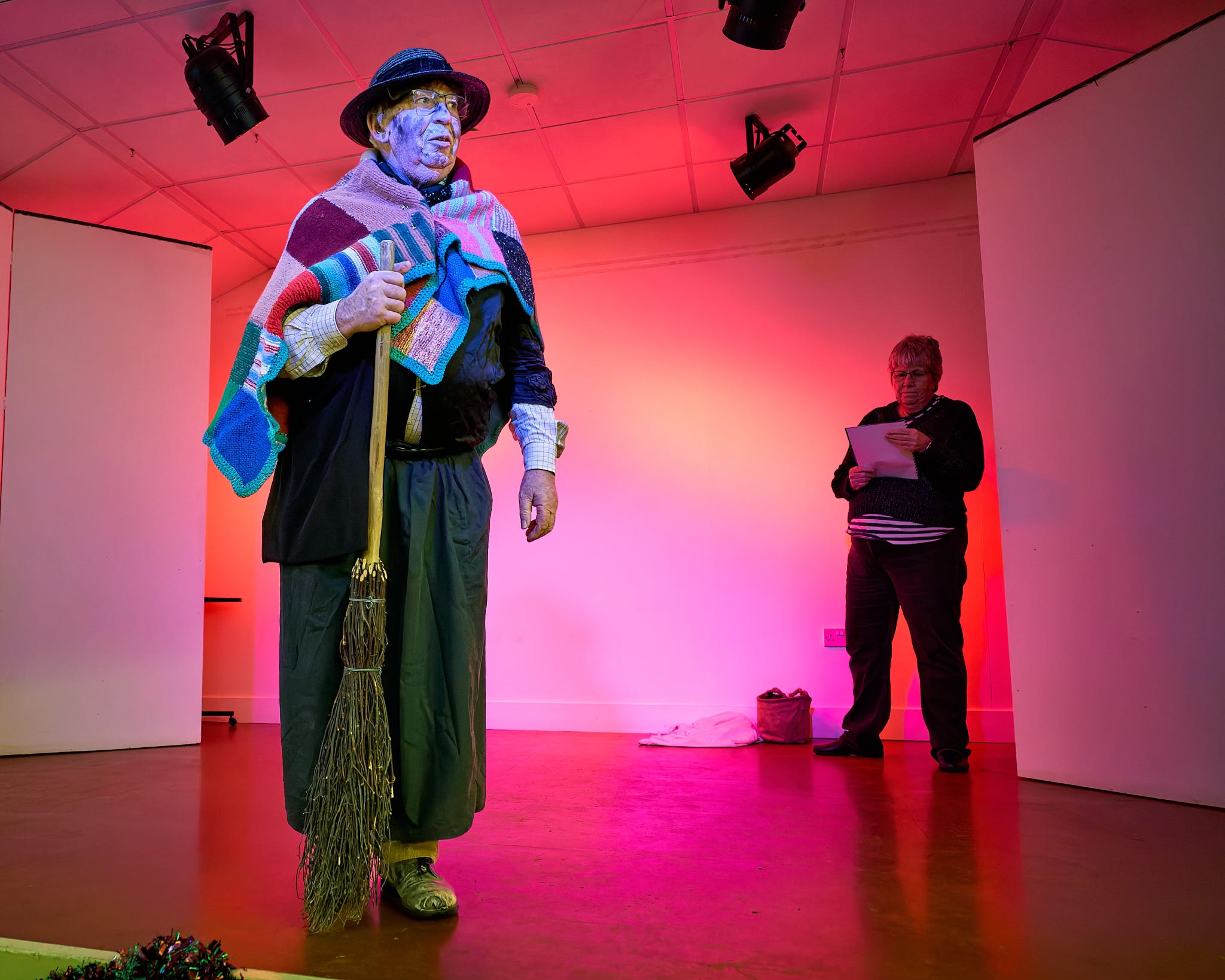
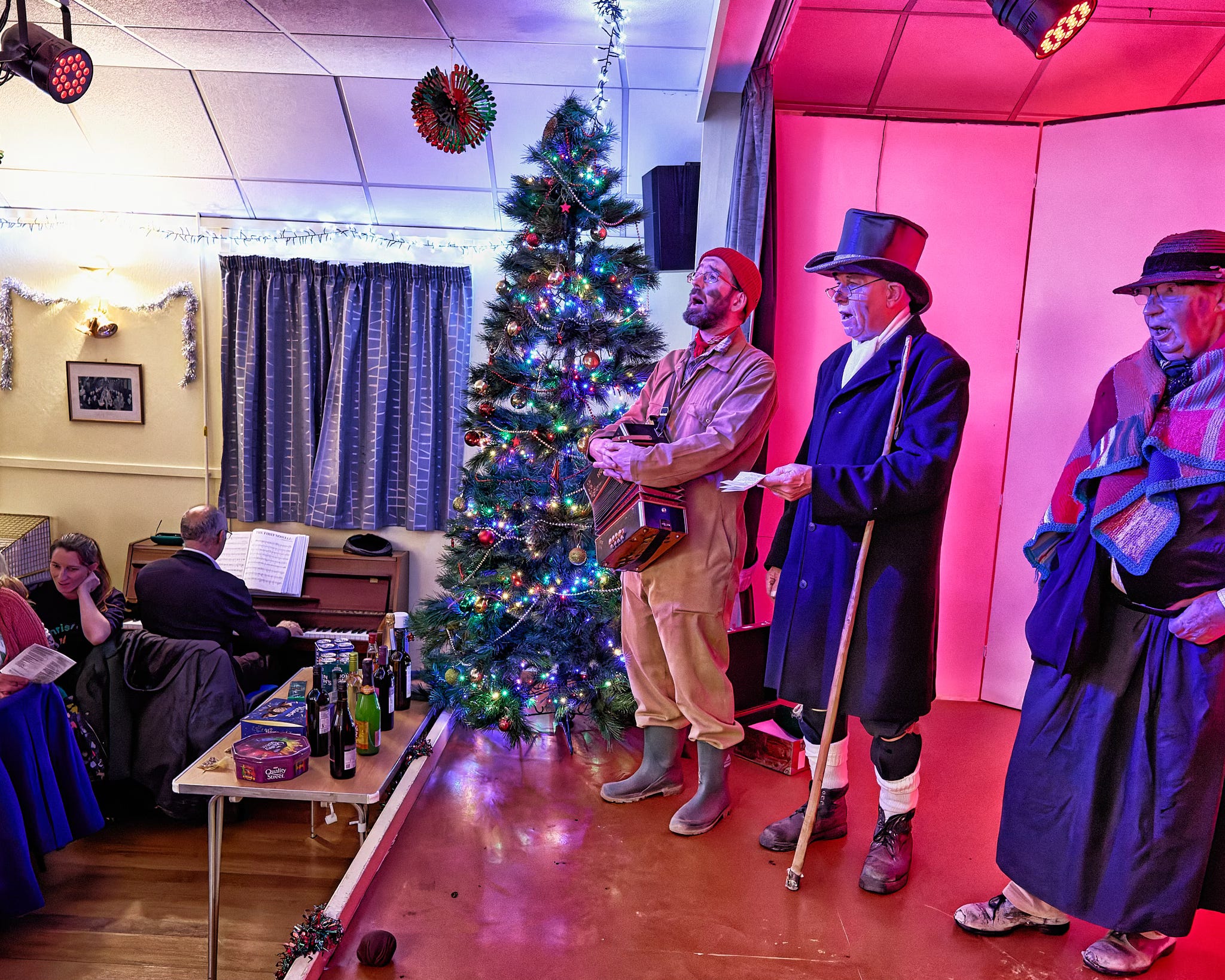
As the kitchen door swung open to thunderous applause, Mollie stepped out, skirt hitched to ascend the steps onto a stage that was illuminated by fiery red spotlights, building excitement for the slapstick performance. With a sweeping gesture using a birch broom, Mollie captivated the audience, engaging with them in a grand tradition of banter. Next, we hear the trampling of feet leaving the kitchen, the ‘Wagoner’ cracking his whip, the hooden horse chomping its hobnail teeth, and a lively cast of farmhands bounding up the steps amid comic antics onto the stage.
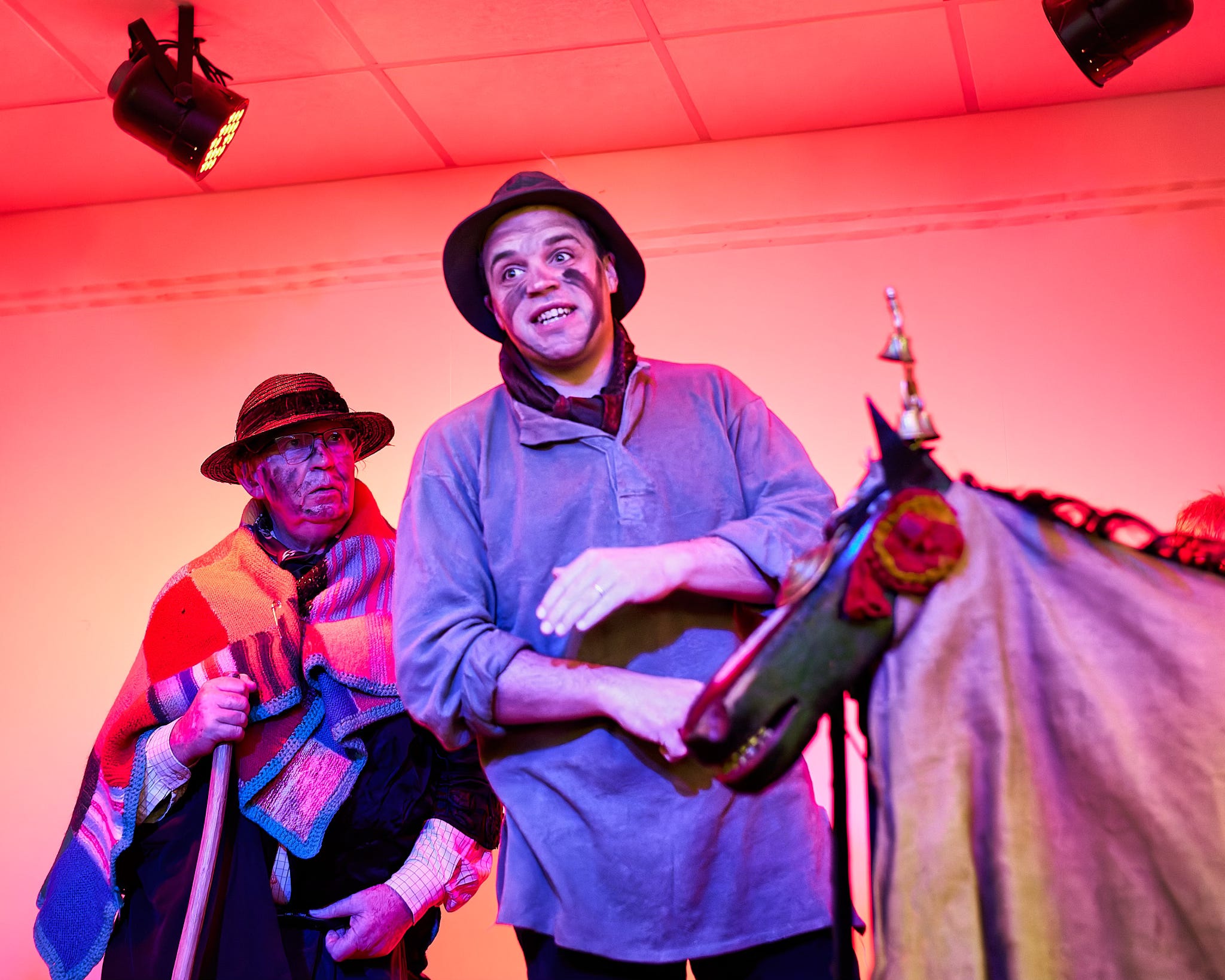
A constant flow of jokes is shared as the battered old horse snaps, dances and wavers. Performers muddle their lines and break character by laughing at their mistakes. This year’s script amps up the drama: it’s the farmhand, carrying electric jump leads for the horse, who gets accidentally electrocuted, collapses, dies, and is miraculously revived by tonic. An unexpected twist that stays true to the classic death-and-revival motif, echoing ancient midwinter symbols of autumn’s end and the joyful promise of agricultural spring renewal.
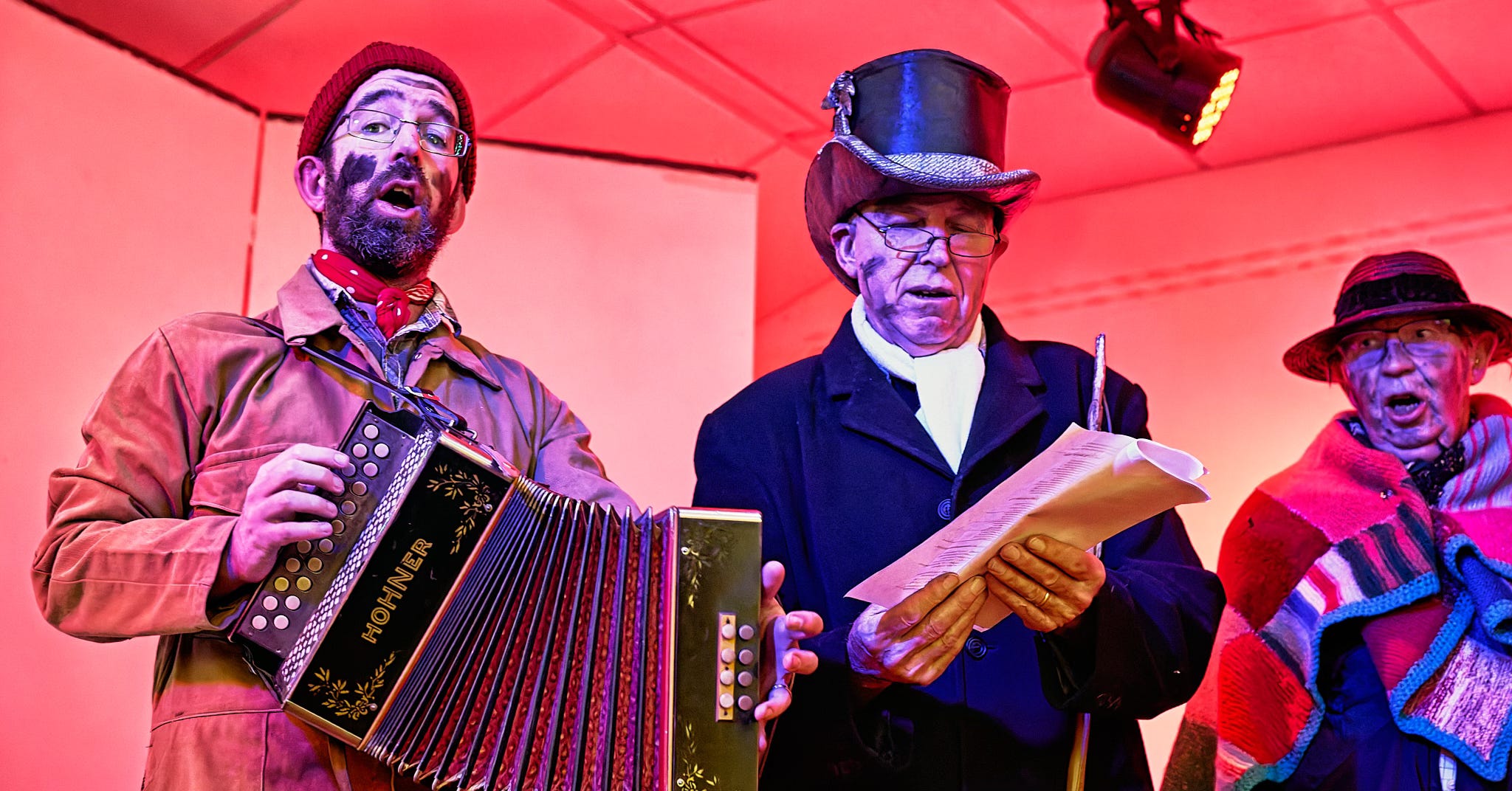
The show continues with audience participation in lively singing of carols and folk songs, while Mollie moves through them collecting donations for this year’s chosen charity. In this village audience, leaving valuables unattended is not a concern. The attendees are a close-knit community of families who look out for one another. Here, the hoodeners’ performance is more than just a chapter in history — it’s a lively tradition, where centuries-old customs have left a lasting impression, and the timeless echoes of the wooden horse still mingle with the winter air.
Epilogue
As a family, we have often watched The Muppets Christmas Carol on Christmas Eve since its 1992 release. When Scrooge is walking through the snowy streets on Christmas Eve, a memorable early moment is Muppet horses singing “Here goes Mr Scrooge” with expressive eyes and a long face pulling a cart driven by a wagoner. The horse does a classic Muppet-style double-take reaction when Scrooge grumpily walks past. It’s delightful background comedy that takes me straight back to my 18th of December Hoodening night.
Britain may not have an official national animal, but the horse holds a special place in its cultural heart. With roots deep in ancient folklore. Although the earliest written references to Hoodening are generally placed in the late 1700s, the tradition of the cycle of death and revival harks back to much older midwinter customs. These traditions illustrate the waning of autumn and the joyful anticipation of spring’s return, with the horse embodying the spirit of virility, strength, and divine renewal.
If you enjoy my work, please comment or like this post. I appreciate your support!
What next
From East Kent’s Hooden Horse to the wild heart of a Fenland Straw Bear, the journey continues. Another farm labourer, lost in a straw disguise, dances winter away—carrying luck, renewal, and the hope of fertile fields as the agricultural year is reborn. Join me for Plough Monday and the Whittlesey, Straw Bear.
Martin Urch Photography owns the copyright to all writing and images.